Memorial Day

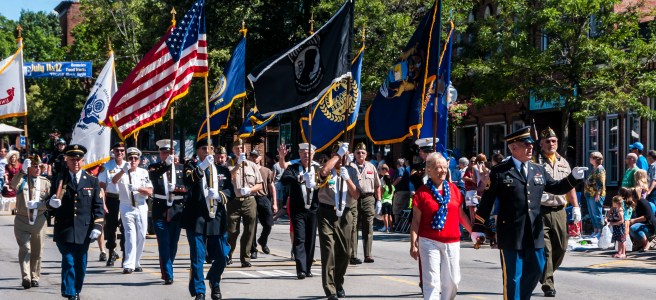
On Memorial Day we honor the men and women who have died while serving in the U.S. military. This day is observed by visiting cemeteries or memorials, holding family gatherings, and participating in parades. Originally known as Decoration Day, it originated in the years following the Civil War and became an official federal holiday in 1971.

By the time the American Civil War had ended in the spring of 1865, more lives had been claimed than in any other conflict is U.S. history. This required the establishment of the country’s first national cemeteries. By the late 1860s, various towns and cities had begun holding springtime tributes to these countless fallen soldiers by decorating their graves with flowers and reciting prayers.

While it is unclear where this tradition had originated, what with numerous different communities independently initiating the memorial gatherings, Waterloo, New York was declared the official birthplace of Memorial Day by the federal government in 1966. Waterloo –  which first celebrated the day on May 5, 1866 –  was chosen because it hosted an annual, community-wide event, during which businesses closed and residents decorated the graves of soldiers with flowers and flags.

On May 5, 1868, General John A. Logan, leader of an organization for Northern Civil War veterans, called for a nationwide day of remembrance later that month. General Logan chose May 30th and called it Decoration Day. The date was chosen because it wasn’t the anniversary of any particular Civil War battle.

On the first Decoration Day, General James Garfield made a speech at Arlington National Cemetery, where 5,000 participants decorated the graves of 20,000 Union and Confederate soldiers buried there. Many Northern states held similar commemorative events and by 1890, each one had made Decoration Day an official state holiday. Southern states continued to honor their dead on separate days until after World War I.

Memorial Day, as Decoration Day gradually became to be known, originally honored only those lost while fighting in the Civil War. However during World War I, the United States found itself embroiled in another major conflict. The holiday grew to commemorate all American military personnel who died in any war.

For decades, Memorial Day continued to be observed on May 30th, the date General Logan had selected for the first Decoration Day. But in 1968, Congress passed the Uniform Monday Holiday Act, which established Memorial Day as the last Monday in May, in order to create a three-day weekend for federal employees. This change, that went into effect in 1971, also declared Memorial Day as a federal holiday.

United States Flag Store is here to answer all your questions. Feel free to give us a toll free call at 1-877-734-2458 or email us at support@onlinestores.com.
Patriotic Decorations for Your Summer Events

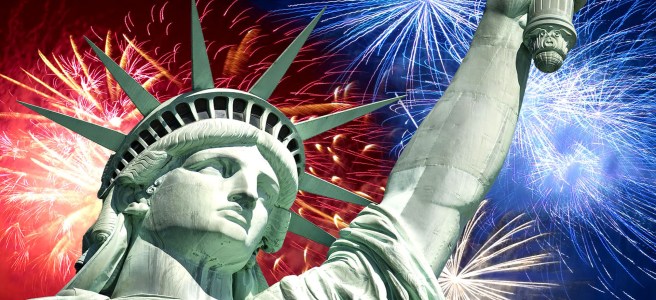
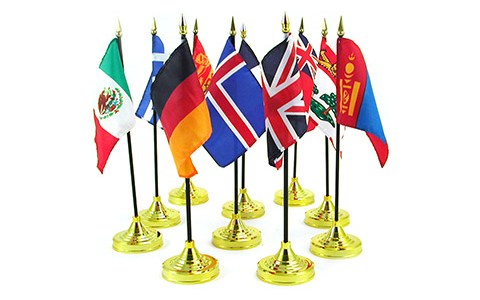
Now that summer is finally around the corner, it is a great time to start thinking about all those BBQ’s, picnics, parades, and especially Memorial Day, Flag Day and Fourth of July events you’ll be attending. United States Flag Store has a great assortment of Patriotic Decorations for all your summertime gatherings.

For parades or tabletop centerpieces, our stick flags are second to none. Available with ball tips, spear tips or no tips, our flags are available in 4 inch x 6 inch , 8 inch x 12 inch and 12 inch x 18 inch sizes.

Our most popular patriotic decoration is, without a doubt, the pleated fans. Available in different sizes and fabrics, there are fans available from Valley Forge, Annin and our own Super Tough brand.

You can proudly display your patriotic banner flags all summer. These flags are durable and gorgeous to look at. United States flag store also carries wall mount flag poles for the banner flags.

United States Flag Store is here to answer all your questions. Feel free to give us a toll free call at 1-877-734-2458 or email us at support@onlinestores.com.

Vexillology – For the Love of Flags

Vexillology is the study of the history, symbolism and usage of flags.  While it is a tough word to pronounce, vexillology is certainly an interesting field of study.  Someone who studies flags is a vexillologist and someone who designs flags is a vexillographer.

Derived from the Latin word vexillum , the Romans used this term to refer to a kind of standard with a fabric hung from a horizontal crossbar on a pole.  It is the nearest equivalent in the classical languages to what we call a flag today.

The term vexillology was born in 1957 by United States scholar, Whitney Smith Jr. (February 26, 1940 – November 17, 2016) and first appeared in print in 1959. Smith went on the co-found “The Flag Bulletin,” the world’s first ever journal dedicated to flags in 1961. One year later he established the official Flag Research Center in Winchester, Massachusetts.

Smith went on to organize the First International Congress of Vexillology with Klaes Sierksma in Muiderberg, Netherlands in 1965. Both Smith and Sierksma joined Louis Mühlemann in founding the International League of Vexillologists and were members of its Governing Board from September 1965, and operated until September 1967. The league was replaced by the International Federation of Vexillological Associations (known by its French acronym FIAV) with Smith as vice-president of the Provisional Council as of September 3, 1967. In 1969, Smith moved from being FIAV Provisional Council vice-president to being the first Secretary-General of FIAV.  Smith was also responsible for founding the North American Vexillological Association (NAVA) and the Flag Heritage Foundation.

Smith wrote 27 books on the subject of flags including Flags Through the Ages and Across the World, The Flag Book of the United States, and Flag Lore of all Nations. Smith was the designer of the national flag of Guyana (pictured below) and served as a vexillographer to a number of governments and organizations.  Smith was also part of the committee that developed the flag of Bonaire.

Smith described the process of creating a design that is appropriate to the subject of a flag with Britannica, stating “The best symbols should have a clear meaning. The essential idea is to create something pleasing but also significant” – Flags of the World: 5 Questions for Vexillologist Whitney Smith Encyclopedia Britannica Blog June 2011

Since World War II, interest in flags has expanded beyond their creation and use. Political scientists, historians, sociologists, and others recognize them as artifacts, expressions of the cultures of certain times and places. Learning about flags is fun (just ask Sheldon from The Big Bang Theory on CBS) and connects to such a wide range of other things to learn:  art and design, history, politics, cultural geography, religion, law.

United States Flag Store is here to answer all your questions.  Feel free to give us a toll free call at 1-877-734-2458 or email us at support@onlinestores.com.
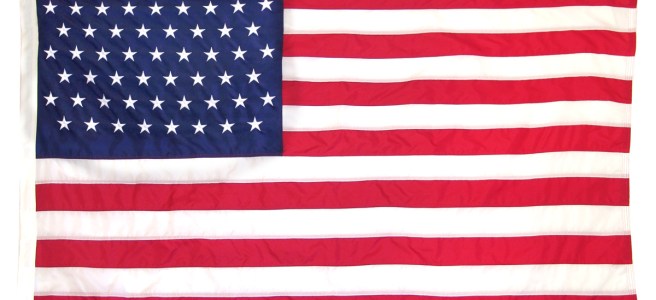
Annin Flags – Proudly Making Our Country’s Symbol Since 1847

Annin Flagmakers, known as the premier flag manufacturer in the United States, have been making Old Glory since 1847. Annin is a 6th generation family owned and operated company headquartered in New Jersey (since 1988) and with factories in Ohio and 2 factories in Virginia.  All of Annin’s American, state, Armed Forces, international, religious flags, and all of their patriotic decorations are make in the United States, with materials that are domestic in origin.

With such a long history, Annin has learned quite a bit in making flags from the creation of long lasting fabrics and inks, to the dense embroidery of the rich star fields. Today, Annin Flagmakers applies the best of 21st century technology in their domestic factories:

– U.S. flags are manufactured with advanced stand-up sewing production techniques.

– Their state, international, and custom flags are digitally printed and screen-dyed to exact color specifications.

– Together with their art department, Annin constantly monitors dye formulas through in-house research and testing laboratories.

– Annin’s distribution systems are in real-time compliance with customer requirements.

Annin’s flags have participated in some rather important world events (among others):

  • The inauguration of Abraham Lincoln, as well as the flag that draped his casket
  • The arrival of Commander Robert E. Peary at the North Pole in 1909 and Rear Admiral Richard E. Byrd at the South Pole 21 years later
  • Raising the flag by U.S. Marines atop Mt. Suribachi on Iwo Jima in 1945
  • America’s 1976 Bicentennial celebration

United States Flag Store is proud to offer Annin’s American flags in an assortment of sizes, plus pleated fans and pulldowns.

United States Flag Store is here to answer all your questions.  Feel free to give us a toll free call at 1-877-734-2458 or email us at support@onlinestores.com.
Fun Facts About the American Flag

  • The Flag Act of 1777 created the official flag for the new nation of United States of America. It stated, in part, that America’s flag “…be made of thirteen stripes, alternate red and white; that the union be thirteen stars, white in a blue field, representing a new Constellation.”
  • The design of the American flag, that inspired Francis Scott Key to write the poem that later became the Star-Spangled Banner, was of 15 stars and 15 stripes (to reflect the 1794 admissions of Kentucky and Vermont to the Union).
  • The colors of the flag have important meanings. Red symbolizes hardiness and valor, white symbolizes purity and innocence and blue represents vigilance, perseverance and justice.
  • There have been 27 official versions of the American Flag, the latest version is the longest to date.
  • The flag was first called “Old Glory” by a young sea captain named William Driver in 1824.
  • According to the U.S. Army Institute of Heraldry and the Flag Code, old versions of the flag never become obsolete. As long as a flag is still in good condition, it can be flown regardless of the number or arrangement of its stars.
  • There are 6 American Flags on the moon, although only 5 are still standing. The one that’s not? That would be the first one, planted by Neil Armstrong during the Apollo 11 mission.
  • If you like to study flags, then you are a Vexillologist.

Super Tough American Flags

United States Flag Store is proud to offer our Super Tough brand American flags. Made from extremely durable spun polyester, our flags are your best choice if you choose to fly your flag 24 hours a day, 7 days a week. These Super Tough flags are also great for high wind areas, but do take those stronger winds to fly as they are made from a heavier fabric.

Made with embroidered stars and sewn stripes, the Super Tough flags have brass grommets and are finished with a canvas heading. Highly resistant to fading or fraying, the colors are true and should last a long time. The Super Tough flags also come with a 6 month limited warranty in sizes 3ft x 5ft, 4ft x 6 foot, and 5ft x 8ft.

Our customers agree, that this is the most durable flag on the market. With proper care, your Super Tough flag will fly as a symbol of hope, opportunity and freedom.

Check out our line of a Super Tough American Flags . United States Flag Store is here to answer all your questions. Feel free to give us a toll free call at 1-877-734-2458 or email us at support@onlinestores.com.
Valley Forge – The Greatest Name in Flags

Founded in 1882, Valley Forge Flag Company, Inc. remains to this day a family-run business. Beginning as a burlap-bag business that later sold World War I surplus, including U.S. flags, the company has evolved and grown through four generations.

It is Valley Forge Flag’s philosophy and practice that U.S. flags are made entirely of domestic materials and that each process in manufacturing the flag is accomplished in U.S. facilities with U.S. labor.

Valley Forge is proud to join other American manufacturers as a founding member of the Flag Manufacturers’ Association of America (FMAA). This association is committed to educating consumers, the press, and flag retailers about the United States manufactured flag industry and its significance to community, economic and social development. Educating the country and helping to enforce the legal requirements for the clear labeling of imported products is an important role that Valley Forge Flag takes very seriously.

To that end, member manufacturers have established the FMAA Certification. This seal is the public’s assurance that the flag being purchased and displayed is 100% Made in the U.S.A. from weaving the material to finishing the flag.

Valley Forge Flag Company continues to grow and flourish, employing well over 300 people. Headquartered in Wyomissing, Pennsylvania, Valley Forge Flag manufactures and distributes its products from state of the art facilities throughout South Carolina. Valley Forge Flag Company continues its commitment to provide high-quality flags exemplifying our country’s national honor and spirit, raising its colors to express respect and pride for our American way of life.

Check out our line of a Valley Forge Flags . United States Flag Store is here to answer all your questions.  Feel free to give us a toll free call at 1-877-734-2458 or email us at support@onlinestores.com.

United States Flag Store’s Frequently Asked Questions

Happy New Year! United States Flag Store welcomes customer questions on flags, flagpoles, flag cases, and accessories. We want, as well do our customers, to be sure that they receive the correct information when it comes to properly displaying flags.  Let’s go over a few of our most Frequently Asked Questions.

What size flag case is needed for an American Memorial (funeral) flag?

All Memorial flags are 5 feet x 9.5 feet in size.  When properly folded, the American Memorial flag will show the stars at the uppermost to remind us of our national motto, “In God We Trust”.  While there is no code on how the American flag should be folded, the current 13 fold manner has gained popularity through the years. Each fold is a reflection of the ideals of the United States of America.

What size flag should I fly on my flagpole?

The answer will depend on the size of your flagpole.  The standard size flag for a residential flagpole (15 feet, 20 feet, or 25 feet) is a 3 feet x 5 feet flag. The larger the flagpole, the larger your flag will need to be. The length of the flag should be at least 1/4 the height of the flagpole.

What does anodizing mean?

Anodization is a process of actually coating the outside of the aluminum flagpole with an oxide. Typically, the aluminum pole is “bathed” in a solution containing sulfur, chromic, or boric acid. In this bath, the aluminum pole is positively charged by connecting it to the positive terminal of a dc power supply, becoming an anode in the chemical process. An inert electronic conductor, usually a plate or rod of carbon, lead, nickel or steel, is then connected to the negative terminal of a dc power supply, thus becoming the cathode. Upon closing the electric circuit, electrons are withdrawn away from the anode, the aluminum pole, and thereby allow ions on the surface on the aluminum to react with the electrolyzed bath solution to form an oxide layer on the aluminum flagpole. Aluminum cations (an ion in an electrolyzed solution that migrates to the cathode) move away from the aluminum pole to react with the water in the bath at the oxide/electrolyte interface to form an oxide at that surface. At the same time, oxide anions (an ion in an electrolyzed solution that migrates to the anode) move toward the aluminum flagpole to react with the aluminum at the aluminum/oxide interface. New oxide is deposited or created at both interfaces and thus the total oxide thickens. This oxide creates a barrier connected to the aluminum flagpole at the molecular level. This oxide can be altered to produce color changes on the pole; the range of available color is limited to shades of bronze to black.

What is the difference between nylon and polyester for the American flag?

Deciding what is the best American flag material depends on how you decide to fly your flag. Polyester flags , being a heavier fabric, are designed to hold up in conditions where there are high winds. They are also best if you plan on flying your flag 24 hours a day/7 days a week. Nylon flags are lighter, so they only need a light breeze to “fly”. They also do better in a wet climate because they are great at shedding water.

United States Flag Store is here to answer all your questions.  Feel free to give us a toll free call at 1-877-734-2458 or email us at support@onlinestores.com.

Labor Day

download
covermytimeline.com

Back in May, Memorial Day marked the beginning of summer, leading to three months of barbecues, vacations, and outdoor activities. After a long and hot summer, we are now at Labor Day in the United States. Children go back to school and the summer traveling season slows down. Labor Day is the day where many take the opportunity to have one last hurrah. A final barbecue, trip to an attraction, or to take the day off.

Every first Monday in September is Labor Day in the United States. The day is to celebrate the everyday worker and their achievements. The first Labor Day was celebrated in 1882 in New York City by the Central Labor Union. The second Labor Day was held a year later on September 5th, which was held the previous year on the same day. Finally, as originally proposed, it was changed to the first Monday in September in 1884. It was originally held in New York City, but then other cities followed suit. Eventually, a few states began to propose Labor Day observations in their legislatures. In 1885, Oregon was the first state to officially recognize Labor Day as an official day while New York was still introducing the bill to their local legislators. By June 28, 1894, Grover Cleveland officially signed the act into law under the pressure of Congress.

Which one? There is debate on who originally proposed the idea of Labor Day. Some say it was Peter J. McGuire, who was the founder of the United Brotherhood of Carpenters and Joiners of America. Others say it was Matthew Maguire, who was a machinist and a secretary of Local 344 of the International Association of Machinists in Patterson, NJ.

In the present, Labor Day is considered a public holiday, so major government offices, post offices, and schools are closed to observe the holiday. Many businesses are also closed in observance or close early. Those who do work on the holiday are usually given holiday pay.

-CD

Parade of Nations

Every four years since 1896, the Summer Olympics are held in a pre-selected host city for several weeks. This year (2016) the Olympics are held in Rio de Janeiro, Brazil. These games will be the first to be held in South America and the first to be held in the Southern Hemisphere in recent years since the Sydney games in 2000.

flgtbnr1000029438_-00_team-usa-premium-felt-banner-flagEvery Olympic games holds an Opening Ceremony, featuring spectacular performances, music, culture, and more. In the midst of the Opening Ceremony is the Parade of Nations, which usually take place in a stadium, arena, or another type of venue in the host nation. The Parade of Nations is where the participating countries parade into the venue, carrying their flag, along with their national team. The teams usually range from one person to several hundred. Each team has a flagbearer, and the flagbearer is picked due to various reasons. Sometimes the flagbearer may be the sole team brazil-superknitmember, a medal hopeful, a medal winner from the previous games, or an official from the nation’s team. Larger nations like the United States elect their flagbearer
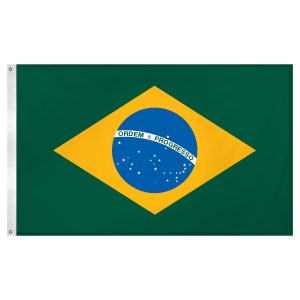
The Parade of Nations is led by Greece and ends with the host nation, which in this year’s case is Brazil. The parade will proceed according to the host nation’s alphabet. The names of the countries are written in the host nation’s language, so it will be listed in a different order. The reason Greece goes first in the parade is because they are the country who originally started the Olympics, so they always go first (with the exception of the 2004 Olympics in Athens, when they went last as they were the host).

It is tradition for the flagbearers to dip (or lower) their country’s flag as a sign of respect, except for the case of the United States. When the US marches in the Parade of Nations, it is tradition for the flagbearer not to dip the flag to the leader of the host nation. This was apparently have been the case since the 1908 Olympics when the flagbearer, Ralph Rose, who was an Irish-American, said “The flag dips to no earthly king”. It is unknown particularly WHY it was done but it was made permanent after the 1936 Summer Olympics in Berlin.

Fast Fact: There is also a Parade of Nations for the Winter Olympics, as well!

-CD