Support Our Troops Flags

The United States Flag Store’s Support Our Troops Flags, Pins, and Magnets are the perfect way to support our troops, whether or not you have a family member or friend serving in the Armed Forces. All of the Flag Store’s Support Our Troops flags are 3 feet by 5 feet and made from superknit polyester, giving the flag a silky look without compromising durability, and include two brass grommets for easy hanging.  Flags are made exclusively for the Online Stores, Inc. Flag Store and may be hung inside our outside.

If you’re looking for a simple way to express your support for the troops, the Flag Store has several flags to meet your needs.  The Yellow Ribbon Flag features the yellow remembrance ribbon printed on a white background.  These flags sell for just $9.95 and are as low as $7.95 when bought in bulk: a perfect idea for a neighborhood support rally!

The Flag Store also features Support Our Troops Flags with the yellow remembrance ribbon on a blue backdrop in three versions.  All three flags have the text: “Support Our Troops” and list each branch of the armed forces.  One version features the United States bald eagle as well.  Each of these flags are only $11.95 and are as low as $8.95 when bought in larger quantities.

If you want to show your support for a family member serving in the war in Iraq or Afghanistan, the Flag Store sells traditional Service Flags manufactured in the United States from wool blends.  At an unbeatable price of $18.95, flags can have up to five stars and include a wooden dowel, wood gilt spear caps, a chainette tassel, a suction cup, and a pamphlet about the service flag.  You can also customize these Service Flags to include the name of your relative serving in the armed forces.  Certain rules apply to displaying service flags and they can only be used to honor immediate family members on active or reserve duty.

The Flag Store also offers a wide variety of magnets and pins to show your support for the troops on your car, refrigerator, or clothing.  At prices as low as 90 cents, order a few for you and your family members or friends today!

World Cup 2010 – Support Your Team!

The 2010 FIFA World Cup will be getting under way in less time than you think. It’s scheduled to start on June 11, and whether you’re planning to cheer for the good old U.S. of A. or some other country, a good way of showing your support is by wearing a classy, patriotic patch or pin from the United States Flag Store.

Pins and patches from most of the top teams participating in this year’s World Cup are available, including Brazil, Spain, England, Portugal, Mexico and the United States. If you can’t decide who to cheer for, you can always have pins the feature two country flags custom made. You could, for instance, make a pin featuring the U.S. and British flags.

Many different patches are available at the United States Flag Store as well. Throwing your support behind the French this year? Make sure to check out the French patch, which is machine embroidered and very detailed. Best of all, the patch has a vinyl back, meaning it can be either ironed of sown to just about anything, including backpacks, shirts, pants and hats.

French PatchOf course, flags for each of the countries taking part in the 2010 World Cup are also available. There’s no better way to let the entire neighborhood know where you stand than hanging a beautiful 3×5 flag outside your home. Those from Mexico are particularly attractive if you ask me.
If you’re heading out for the evening to watch the games amongst friends, why get yourself some of our hand flags. Available in both 4×6 inch and 12×18 inch sizes, these flags are perfect for waving in the streets or bars of your hometown. They’re also great for anyone that is actually planning on attending the World Cup, as they can be easily waved from the stands.

Gadsden Flag T-Shirts – Don’t Tread On Me

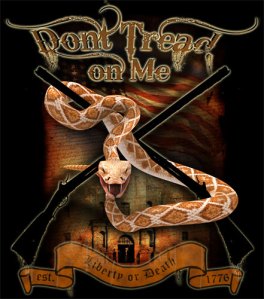
The Gadsden flag: it’s a symbol of freedom, a sign of resistance, a warning shot fired across the bow of those that might think it fit to infringe upon the freedoms of the citizens of this great nation. It bears but few simple words, but within their meaning lie the force of a great hurricane, and all those that gaze upon it cannot help but understand its most singular message: Don’t Tread on Me. Those that carry the Gadsden flag, whether it be with their hands or in their hearts, believe in the principles upon which the United States of America was founded, and upon which she shall continue to thrive.
In light of these immutable truths, the United States Flag Store has decided to offer its customers the chance to not only own the Gadsden flag, but to wear it upon their chests as well. Created by our own team of local designers, these Gadsden flag t-shirts are available exclusively on our Website. Choose between six original designs, each one unique from the next, and which have been given such fitting names as Patriots, Guns, and Fire.

The Gadsden flag was created by Christopher Gadsden in 1775. At the time, Gadsden was taking part in the Second Continental Congress, which had just created the United States Navy to keep British ships from reaching the colonies. A small group Marines, which happened to carry yellow drums with a rattlesnake and the words “Don’t Tread on Me” painted upon them, was given the mission of accompanying the Navy on its first mission.

Whether Gadsden was inspired by the drums or in fact created them himself is the subject of some debate. However, it’s an undeniable fact that Gadsden soon presented the Navy’s commander with a flag bearing the same design, and, as the saying goes, the rest is history.

Celebrate the Gadsden and all that it stands for by picking up a Gadsden t-shirt today!

Storm Flags Serve as Warning Signs

By Kristi Ries

Hurricane season in the Atlantic Ocean officially begins on June 1 of each year, and lasts for nearly six tumultuous months before it comes to a close. On average, over 100 tropical storms form over the Atlantic.

Due to this high rate of activity, mariners have historically depended on warning flags displayed at their harbors and Coast Guard Stations to warn of approaching ocean storm systems.
In 2007, the U.S. Coast Guard re-established a Coastal Warning Display (Storm Flag) program at selected Coast Guard boat stations throughout the U.S to warn the public of approaching storm conditions. Coast Guard stations had participated in the National Weather Service’s official Coastal Warning Display program for over 100 years, along with yacht clubs and marinas, until it was discontinued in 1989. Today, experienced boaters can easily identify the meaning of such nautical flags, whose geometric shapes and colors represent the severity of impending weather conditions.

The flags serve to warn mariners of small craft advisories, gale warnings, storm warnings and hurricane warnings. And these flags are being used more often than ever. Scientists claim that rising air and water temperatures worldwide are creating more frequent and severe hurricanes.

A hurricane is a tropical storm with winds that have reached a constant speed of at least 74 miles per hour. The eye of such a storm is vast, usually measuring 20-30 miles wide, and can envelope more than 400 miles. Dangers of a hurricane include torrential rains, high winds and storm surges that leave major destruction in their wake. At sea, hurricanes can last for 2 weeks or more and can run a path across the entire length of the United States’ Eastern Seaboard before dissipating.

In addition to hurricane flags, there are also international maritime signal flags—one for each letter of the alphabet—that mariners can use to spell out messages or can be combined to form a code word. Boating enthusiasts and Atlantic coastline dwellers can breathe a sigh of relief this year, as the 2009 hurricane season ended uneventfully on November 30 with just three storms reaching destructive hurricane status instead of the average six.

Jolly Roger Flag

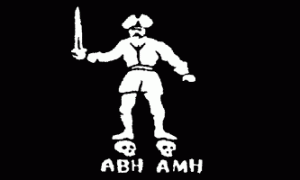
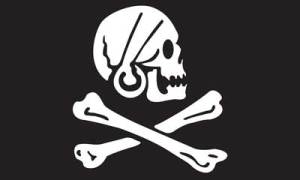
Still very popular in today’s culture is the Jolly Roger, the name of which was given to any of the various flags flown to identify a ship’s crew as pirates. The most common flag that identified a ship’s crew as pirates is the skull and crossbones: a skull above two long bones set in an x-mark arrangement on a black field. The name “Jolly Roger” has been thought to have come from joli rouge (pretty red), an ironic French description of the bloody banner flown by early privateers. These flags were intended to strike mortal terror in the hearts of the pirate’s intended victims.

Jolly Roger Flag

This design was reportedly used by the pirate captains Edward England, John Taylor, Sam Bellamy, and John Martel. Despite the current popularity, most pirates in the 17-18th centuries used plain black flags. Pirates did not use the black flag or Jolly Roger flag at all times. Instead they stocked a variety of flags and would fly false colors until they had their prey within firing distance. When they had their victim within range, it was then that the Jolly Roger flag would be raised, often concurrently with a warning shot.

Another Jolly Roger Flag

An interesting tidbit is that in World War II, it was common practice for the submarines of the Royal Navy and Royal Australian Navy to fly the Jolly Roger on completion of a victorious combat operation as a display of boasting and slyness instead of mayhem. Additionally, since the decline of piracy (although pirates in today’s world still exist), various military units have used the Jolly Roger as a victory flag and a show of fierceness and stoutness.

Flagpoles for Hurricane Season

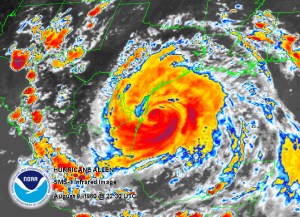
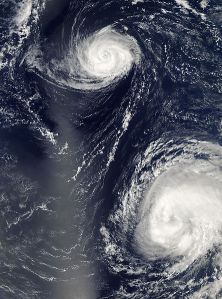
Hurricane season means different things to different people. For some of us, hurricane season is simply that time of year when the weather man’s radar screen is full of bright colors swirling across places like Cuba and the Florida Keys. Sadly, for others, hurricane season is much more than swirling colors on a map; it’s a time when extra precautions must be taken to insure the safety of our families and possessions.

Hurricane

If you’re someone that lives in an area that’s prone to being hit by hurricanes, one such precaution that you might want to consider taking is that of buying a flagpole strong enough to resist the high winds that such a storm can produce. Standard flagpoles can bend and even snap in such conditions, leaving anything within striking distance at risk.

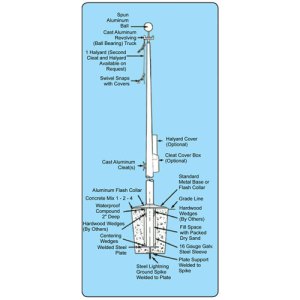
Our Hurricane Series Flagpoles are the perfect option. Due to their increased wall thickness and butt diameter, they can withstand up 255 MPH when unflagged and 150+ when flagged. Standard accessories include a cast aluminum cleat with mounting screws and a galvanized steel foundation sleeve. They’re also available with either an internal or external halyard.

Hurricane Series Flagpole

A durable flag is also essential to anyone living in an area with high wind conditions. Our sewn polyester flags are the toughest on the market today. Their open-weave design reduces fabric stress and is more resistant to high winds. However, due to the fact that they’re made of a heavier fabric, they require more wind to fly than would a flag made of, say, nylon. They also require more effort to take down and put up. We offer a six month warranty on these flags.

Flag of New Mexico

The flag of New Mexico was adopted in 1925 after the Daughters of the American Revolution pushed New Mexico to design a contemporary and unique flag. A contest was held and the design chosen was created by Dr. Harry Mera of Santa Fe, New Mexico. The design has a red sun symbol of the Zia on a field of yellow. The colors honor Isabella of Castile.

New Mexico FlagThe symbol has definite meaning; four is a sacred number which symbolizes the Circle of Life: four winds, four seasons, four directions, and four sacred obligations. In a 2001 survey by the North American Vexillological Association, the New Mexico flag was chosen the best designed of any US state, territory, or Canadian province.
New Mexico statute says, “New Mexico Statutes Annotated 12-3-2. [Adoption of flag for state of New Mexico.] That a flag be and the same is hereby adopted to be used on all occasions when the state is officially and publicly represented, with the privilege of use by all citizens upon such occasions as they may deem fitting and appropriate. Said flag shall be the ancient Zia sun symbol of red in the center of a field of yellow. The colors shall be the red and yellow of old Spain. The proportion of the flag shall be a width of two-thirds its length. The sun symbol shall be one-third of the length of the flag. Said symbol shall have four groups of rays set at right angles; each group shall consist of four rays, the two inner rays of the group shall be one-fifth longer than the outer rays of the group. The diameter of the circle in the center of the symbol shall be one-third of the width of the symbol. Said flag shall conform in color and design described herein.”

Louisiana Flag

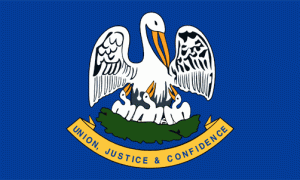
The Louisiana Flag was originally created in the year 1912. However, it was recently updated in 2006 to its current design. The flag is a bit peculiar – much different than most other flags in the United States. On the Louisiana Flag sits an image of a family of pelicans, placed atop a blue background. Directly beneath the pelicans sit the words “UNION JUSTICE and CONFIDENCE”.

Louisiana FlagThe image in the center of the Louisiana Flag is commonly referred to as a “pelican in her piety”.  It depicts a mother pelican intentionally wounding herself in order to feed her babies with her own blood.  On the Louisiana Flag, it has been made official that the mother pelican should appear with three drops of blood coming out of her body.  Below the image sit the words “UNION JUSTICE and CONFIDENCE”, the state of Louisiana’s motto.
The symbol of the “pelican in her piety” has been used since medieval times.  The pelican was often thought of as being very attentive to her young, even to the point of wounding itself to feed them with its own blood whenever no other food was available.  The pelican has been used to represent many symbols and religions; most notably it has often been used to symbolize Jesus Christ.

Louisiana has had three major flags fly over it throughout the years, starting in the year 1861. Prior to this year, Louisiana did not have any official flag, though various flags were unofficially used.  The first of the flags of Louisiana was created in January, 1861 once the state succeeded from the American Union, before the Confederate States of America were created.  The state then adopted another design that was used until the end of the Civil War, and today’s current design for the Louisiana Flag was officially put into use in 1912.

Utah Flag

by Sherri Smith

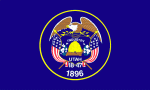
The current flag of Utah was adopted in 1913 and includes the Seal of Utah encircled in a golden circle on a background (ensign) of dark navy blue. The original Utah State Flag was adopted by the State Legislature in 1896 and revised in 1913. The beehive on the shield represents hard work and industry. The date 1847 is the year the Mormons made passage to Utah. A bald eagle, the United States national bird, settles atop the shield and symbolizes protection in peace and war. The sego lily is a symbol of peace and a U.S. flag appears on each side, symbolizing Utah’s unity to the nation.

Flag of UtahThe seal is the focus of the flag and is an integral part of the design of the flag. The great seal is described in Utah Code Annotated, 1953, Volume 7a, section 67-2-9 as follows:
“The Great Seal of the State of Utah shall be two and one-half inches in diameter, and of the following device; the center a shield and perched thereon an American Eagle with outstretching wings; the top of the shield pierced by six arrows crosswise; under the arrows the motto “INDUSTRY”; beneath the motto a beehive, on either side growing sego lilies; below the figures “1847”; on each side of the shield an American Flag.; encircling all, near the outer edge of the seal, beginning at the lower left-hand portion, the words, “THE GREAT SEAL OF THE STATE OF UTAH”, with the figures “1896” at the base.”

The design of the seal was adopted in 1850 by the Territory of Utah and modified by the artist Harry Edwards when Utah became a state in 1896.

Classroom Flag

by Kathy McCarthy

Throughout history, we’ve marked our territory with a flag. Whether an invading army is planting its flag on its newly acquired spoils, or a man on the moon is claiming an entire planet, flags announce our presence.

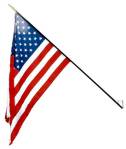
Classroom FlagIn classrooms throughout the United States, our nation’s flag is a common sight. Occasionally, a classroom will have a full sized flag, but more often it will have a classroom flag. These flags measure two feet by three feet, and are the perfect size for getting noticed in a classroom without overpowering the room.

Visually, flags are a subtle reminder of who we are as a nation or as a state, and by extension who we are as a people. We learn our identity in many ways. Our parents teach us how to develop our morals. Our friends teach us how to develop our social skills, and our schools teach us how to develop not only our brains, but also our citizenship.

Our flag has come to symbolize our country’s freedom, which we can easily take for granted if we do not stop and remember from time to time that our freedom did not come easily. Our flag reminds us to pass this important information down to the next generation with the hopes that they can understand the past and continue to forge the future.

We are all citizens of a great nation. Even with all of its faults and shortcomings, our nation is amazing. We take care of our own, and we take care of most of the world as well. Are we perfect? Not by a long shot, but we keep trying.

Our flag reminds us that even though we are not perfect we are still great, as a nation and as a people. And whenever you see a flag in the classroom, that is what our children are learning. Without any words, it is just something that they will know