History of the Flag of Scotland

The official flag of Scotland, also called the Saltire, is believed to be one of the oldest national flags in the world, dating back to the 12th century. It is composed of a white cross on a vivid blue field. The word “saltire”, is in fact, a reference to an “X” shaped Christian cross, in this case, specifically to the one on which St. Andrew is said to have been crucified by the Romans.

Flag of Scotland

St. Andrew is believed by Christians to be one of the original apostles and the brother of Simon Peter. He is also the patron saint of Scotland. Hence the flag of Scotland is also referred to as the Cross of St. Andrew.
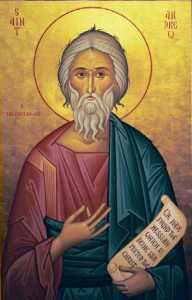
Saint Andrew
Saint Andrew

St. Andrew is connected to Scotland through legends surrounding the travels of bits and pieces of his remains, also known as “relics”. Two different stories forge a link between St. Andrew and Scotland. One says that the relics were carried to Scotland by Acca, the Bishop of Hexham, in the year 733.

In the other, more colorful story, about 300 years after his crucifixion, St. Andrew’s remains were moved to Constantinople by Constantine the Great. Sometime later, a monk, known as St. Rule (or St. Regulus) dreamed that he should remove the remains and take them to the ends of the earth for safekeeping. He did so by pillaging the body, taking a kneecap, a tooth, an arm bone, a tooth and some fingers. It is believed that he shipwrecked and came ashore on the east coast of Scotland, and so it is that the relics became associated with Scotland.

In another story, the Saltire was conceived in the year 832 when battling Scots at Athelstaneford saw what they believed to be a favorable sign—clouds collected in the X-shape of the cross that St. Andrew had been crucified on, against the blue sky. They won the battle, and flew the flag of St. Andrew forever afterward.

The Union Jack, the flag of Great Britain, is comprised of symbols from the flag of England, the flag of Ireland, and the flag of Scotland: the Saltire.

–Carol Frome
SEEKING: Bloggers for Flag Blog

Do you have an interest in flags? Do you enjoy writing?

Seeking Bloggers

You are in luck! We are seeking talented bloggers to write for the Flag Blog, a partner site of the United States Flag Store (http://www.united-states-flag.com)!

All writers, if selected, will be generously compensated for their time and efforts – and what’s better than getting paid to write about something you love anyways?

If you are interested, email us today with the following information:

  • Name and e-mail address.
  • Why are you interested in this position?
  • Do you have experience blogging?

The Gadsden Flag: Symbol of Freedom

Today American taxpayers in more than 300 locations in all 50 states will hold rallies – dubbed “tea parties” – to protest higher taxes and out-of-control government spending. And the banner uniting all of these concerned Americans? Well, the Gadsden Flag of course!

The Gadsden Flag has traditionally been seen as a symbol of American patriotism.  The traditional imagery associated with the Gadsden Flag was first seen in the year 1775.  The Second Continental Congress had just authorized the first Gadsden Flagever mission for the new American Navy, and among the first marines to enlist during this time were men from Philadephia.  These marines are best known for carrying their symbolic yellow drums depicting a coiled rattlesnake with 13 rattles, with “Don’t Tread On Me” being their now famous motto.
It is commonly believed that the flag itself had been inspired by these symbolic drum-carrying Marines from Philadelphia, with Continental Colonel Christopher Gadsden of South Carolina as its creator.  At the second Continental Congress, Gadsden submitted his flag to then commander in chief of the Navy Esek Hopkins, and the rest was history!

The Gadsden Flag is still flown in Charleston, South Carolina – the city where Chrisopher Gadsden first presented the flag.  It was flown in the wake of the September 11th attacks, most notably by US Customs officials and harbor patrol boats in US ports.  The Gadsden Flag is also commonly flown by many Boy Scouts troops, and has even been featured in a few movies and television shows, most notably in the 2000 film The PatriotBut now, the Gadsden Flag is prepared to take on its new role — as the banner of the Tax Day Tea Party rallies popping up all over America.

According to The Wall Street Journal,

“The protests began with bloggers in Seattle, Wash., who organized a demonstration on Feb. 16. As word of this spread, rallies in Denver and Mesa, Ariz., were quickly organized for the next day. Then came CNBC talker Rick Santelli’s Feb. 19 “rant heard round the world” in which he called for a “Chicago tea party” on July Fourth. The tea-party moniker stuck, but angry taxpayers weren’t willing to wait until July. Soon, tea-party protests were appearing in one city after another, drawing at first hundreds, and then thousands, to marches in cities from Orlando to Kansas City to Cincinnati.”

Tax Day Tea Party

There are currently between 300 and 500 protests planned to occur in various cities around the world today, and there is sure to be a tea party near you.  For more information or for tea party locations, be sure to check out www.taxdayteaparty.com

If you’re planning on attending one of the many Tax Day Tea Parties across the country, or if you already have, feel free to drop off a comment and let us know how it went!


The Valley Forge Flag Company

The Valley Forge Flag Company was founded in 1882, and remains a family-owned business to this day. Steeped in history, the company began as a burlap sac business, and then moved on to World War I surplus, including American flags. With increasing demand the company opened a small sewing factory in Spring City, PA in 1932. The opening of this factory was the beginning of Valley Forge Flag brand.

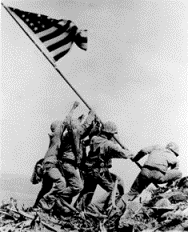
Infamous Flag at Iwo Jima
Infamous flag at Iwo Jima

Valley Forge Flag’s mission is to manufacture 100% American-made U.S. flags. As a founding member of the Flag Manufacturers Association of America, Valley Forge educates the public and flag retailers about the significance of manufacturing American flags in the U.S. The association also helps enforce the labeling requirements for imported products. Any flag marked with the FMAA seal is guaranteed to be made in the U.S. with only American-made materials.

In 2005 Valley Forge Flag Company consolidated all of its manufacturing to South Carolina and closed its plant in Womelsdorf, Pennsylvania. Its headquarters moved to Reading, Pa. The company has around 500 employees, participates in the “welfare-to-work” program and employs disabled Americans.

Valley Forge flags are available at numerous retail outlets, large commercial flag dealers and online. Valley Forge Flag has a large product line including a variety of flags, flagpoles and accessories. The historical company will continue to manufacture high-quality, American-made products for years to come.

The United States Flag Store is the largest and most complete vendor of Valley Forge Flags, flagpoles and accessories, keeping a wide range of Valley Forge products in stock and carrying larger quantities than any other dealer.

President Approves New 51 Star American Flag

Well, America, I thought this day would never come. For years I’ve pledged my allegiance,  saluted, and watched my beautiful handwoven 50 star American Flag wave gently through the wind each and every day. However, not anymore.


Capitol Hill

Early this morning in a special joint session of congress, President Obama met via internet from his current stay in the UK with his cabinet and fellow lawmakers on Capitol Hill. They were hard at work putting the finishing touches on Senate Bill SB737-A, which was released to the public late Friday evening. Surprisingly, this controversial bill has gotten very little coverage by the mainstream American media, but this is of course typical for most news stories released at the end of the week.

Citing the current economic catastrophe, President Obama reportedly issued the following statement early this morning:

“This is a great day for America.  I would like you to please join with me as we celebrate this momentous occasion.  No longer are we a nation of Blacks and Whites.  No longer are we a nation of Rich and Poor, of “haves” and “have-nots”.  We are, instead, a nation of Americans.  Please join me in welcoming our nearly 4 million new brothers and sisters who have so valiantly and bravely made the decision to become a part of the greatest nation the world has ever known.”

This statement was made shortly after the signing of Senate Bill SB737-A early this morning, while most Americans were still asleep.  I won’t bore you with the litany of monotonous details, but in a nutshell it is a bill declaring the annexation into the American Union of ” El Estado Libre Asociado de Puerto Rico” Or, for you and I – Puerto Rico.

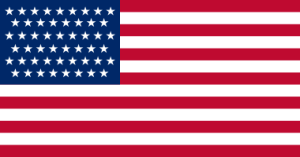
That’s right, America.  While you were so innocently sleeping, the American government had begun to forge an all out assault on our beloved country.  No longer are we the “50 Nifty United States”, we are now, as of today,  51.

According to White House Press Secretary Robert Gibbs, this decision “adds millions of jobs to the American economy”, and also will begin to “open up a few key trade routes that have begun to dwindle over the past few years”.  I for one, don’t think that adding an entire state to our country is going to do much towards boosting our struggling economy, but then again maybe that’s why I’m not the one in charge.

As noted historian Thomas Mclaughlin put it:

“This is a sad day for my country.  Never in my life did I imagine I would see something as ludicrous as this.  The sheer manner in which Congress passed this piece of legislation should in itself raise questions as to the Constitutionality of the entire ordeal.”

Fifty One Star Flag
Fifty One Star Flag

Well America, it’s surprising to say the least.  And perhaps frightening to say the most.  No longer will we be Pledging Allegiance to Old Glory, thanks to our lawmakers even that small piece of American tradition is now lost forever.

Congress will be officially be releasing public statements as to the passage of the bill as well as the ratification of the new 51 star American Flag sometime later this afternoon.

I have a few words for you, Congress — Your unwieldy use of power has begun to destroy the very country that you claim to serve.  I also have a few words for the rest of you, America — April Fool’s.

The American Flag: I Pledge Allegiance

I pledge allegiance to the flag of The United States Of America.  And to the Republic for which it stands, one nation under God…… wait a second.. what does any of this even mean?

If you were at all like me as a kid growing up (hopefully not too much like me, that’d be a scary sight 🙂 ), I’m sure you spent a few minutes in school every morning on your feet before the flag, still in a half-asleep trance, reciting “The Pledge”.  As the years went on, I began to realize that I could recite this patriotic collection of 36 words backwards, forwards, inside out and upside down.  However, I soon began to wonder– What does it all mean? Does one piece of colorful rectangular fabric really have the authority to command my undivided loyalty and absolute allegiance?

Of course!” I decided, “I must do what any true scholar would do in this sort of life-defining situation!” — so I Googled it.

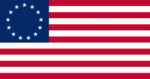
Betsy Ross Flag
Betsy Ross Flag

After countless seconds of extensive research, I finally stumbled upon the vast and infinite wisdom of none other than the great Wikipedia.  Apparently, the first American flag was originally created on June 14th 1777, just one short year after the signing of the Declaration of Independence.  As I’m sure most Americans know, it consisted of a field of 13 stars arranged in a circle in a field of blue, surrounded on 2 sides by 13 stripes, alternating between red and white.  The American flag has been changed 26 times since its inception, with the addition of additional stars for each new state that has since acceded to the Union.  However, despite all of its changes, the American flag has managed to retain its trademark red, white, and blue colors.

Although there have never been any official statements as to what exactly the colors of the flag are meant to symbolize, certain traditions have attributed the colors to a few widely accepted meanings.  For example, it is generally accepted that the red in the flag stripes represents the blood shed by our military in defense of our great country and its freedoms.  The white is attributed to America’s supposed purity, and the blue represents truth and a dedication to justice.

The 50 Star American Flag

I must admit, for years I guess I was probably pretty guilty of just trying to be cool without ever really knowing what I was saying.  I mean — everyone else is saying The Pledge, I guess I should jump on the bandwagon too, right?

All jokes aside, I’m glad I finally got the chance to realize what that rectangular piece of fabric really stands for.  No longer am I simply “pledging allegiance to the flag”, I am instead pledging allegiance to the brave men and women who gave that flag to me, and pledging allegiance to the noble virtues and values it represents.


Flag History: Ancient to Present Day

Pennsylvania Flag
Pennsylvania Flag

You see flags everywhere from federal buildings to clubs and organizations. Flags are used to commemorate special celebrations and events. They are also flown at half-mast to honor the dead, and draped over the coffins of national heroes. Most people know the current meanings of flags, but do we know flag history?

People have been using flags for more than 4,000 years. Ancient flags were called vexilloids, meaning guide, made of metal or wooden poles featuring a unique carving at the top of the pole. The first known metal flag is made of metal from Iran dating back to 3000 BC. Evidence of flags has also been found on ancient Greek coins and Egyptian tomb carvings. As time went on, approximately 2,000 years ago, pieces of fabric were added to vexilloids for decoration creating similarity to flags of today.

POW MIA Flag
POW MIA Flag

Now, we fast-forward to the middle ages of knights, kings, and queens. Long ago during the Middle Ages, flags were used as a means to give others information, such as who they are. During the middle ages, knights carried flags for identification purposes, because it was difficult to discern whom the knights were when they were covered in armor for battle. Flags were of great importance during this time because they helped soldiers discern friends from enemies in battle.

Today flags are used to convey information, signals or stand for special symbols or things. Many organizations including the Girl Scouts and the United Nations have flags. Clubs and organizations also have their own flags. For example, the five circles of the Olympic flag represent to joining of people from five continents in friendly competition. The United Nations flag displays an image of olive branches cradling the world conveying a message of peace. Notorious people such as royalty have their own personal flag to fly over any building they are staying.

Canada Flag
Canada Flag

It really is quite interesting how flags have evolved over the last 4,000+ years and it is time to celebrate current flags. There are flags for everything from holidays, armed forces, international, and much more. Find your favorite flag!

History of the Irish Flag

Did you know Ireland has had two national flags? They are the Green Flag and the Tricolor Flag. One flag is green with a harp and the other is tricolored with green, orange, and white.

Ireland National Flag

The current Irish flag is a tricolor of green, white and orange. It has three colors of equal size and vertically disposed with the green displayed next to the staff. Some say that the flag is gold as opposed to orange, from the gold harp on the original Green Flag.

This confusion arose in the 1916-22 period when the tricolor flag, which had previously been marginal and little known, was superseding the Green Flag as the national emblem. Green and gold, the colors of the Green Flag, were regarded as the national colors throughout the nineteenth century and some of the homemade tricolors from the 1916-22 period were in fact green, white and gold. There are also some songs from that period that refer to ‘green, white and gold’ flags and this helped to keep the concept alive, but the symbolism of the green, white and orange dates from 1848.

Thomas Francis Meagher first introduced the Tricolor Flag during the revolutionary year, 1848 as an emblem of the Young Ireland movement, and it was often seen displayed at meetings alongside the French tricolor.

The green represents the older Gaelic and Anglo-Norman population, while the orange represents the Protestant planters, supporters of William of Orange. The meaning of the white was well expressed by Meagher when he introduced the flag. He stated, “The white in the center signifies a lasting truce between the ‘Orange’ and the ‘Green’ and I trust that beneath its folds the hands of the Irish Protestant and the Irish Catholic may be clasped in heroic brotherhood.”

Erin Go Bragh Flag
Erin Go Bragh Flag

This flag did not come into general usage until the War of Independence (1919-1921). Prior to this, the green flag with gold harp was the main symbol of nationalism. It was not until the Rising of 1916, when it was raised above the General Post Office in Dublin that the tricolor came to be regarded as the national flag, but only at the creation of the first House of Representatives /Commons did the current Tricolor become widely recognized as a national flag.

Show your  spirit with an Ireland Flag.  Even you are not of Irish descent it does not matter. Don your green apparel and shamrocks and have fun!

Expressing NASCAR Enthusiasm

Ladies and gentlemen, start your engines! I’m almost certain you know what that means. It’s NASCAR season. All of the great drivers including Dale Earnhardt, Jeff Gordon, and Tony Stewart are showing off their amazing driving skills.

NASCAR Flags

NASCAR season is like Christmas – a time to get together with friends and family. Yes, I know the festivities associated with racecar driving. Everyone gets together on the weekends to root for his or her favorite driver and revel in the excitement of the race. Adults are inside playing cards and watching the race while the kids are outside playing.

I don’t know about all of you, but I enjoy showing my enthusiasm for the sport of racecar driving. My house has NASCAR flags inside and out showing how  much I love racing. Seeing as I drive as if I belong on a racetrack my vehicle dons NASCAR car flags too. I am telling you people I am an absolute racing fanatic.

It gets better, I have NASCAR collectible cars in display cases to keep them from getting dusty or ruined. Hey, you never what can happen when you have a house full of people over. Another fun NASCAR item I have is a checkered flag for people to walk through when leaving or entering my house. It makes them feel like winners and who doesn’t like that feeling?

Come on people, what are you waiting for? Get your home decorated for NASCAR season and show your support for your favorite driver. See you at the races!

What Are the Rules of American Flag Etiquette?

American Flag

Do you know the rules of American flag etiquette? There are rules dictating flying at half-staff, when to fly the flag, carrying the flag, folding the flag, and displaying with other flags. I do realize the rules of etiquette for an American flag may seem complicated, but they are quite simple to follow.

Flying at Half-Staff

“Half-staff” means the position of the American flag is halfway between the top and bottom of the staff. Flag etiquette dictates the flag to be flown at half-staff on Memorial Day until noon, then raise it back to the top, Patriot Day (September 11), Pearl Harbor Remembrance Day (December 7), and death of a government official.

When to Fly the American Flag

There are several designated dates to fly an American flag throughout the year. The most noted are Memorial Day, Flag Day, and Independence Day. In addition, to specific days of the year is time of day constraints. For flags that are stationary on a building or a flagpole it is customary to fly them from sunrise to sunset. American flags can be flown at night provided it is properly illuminated. This means the flag must have its own dedicated spotlight and then it can be flown twenty-hours per day if desired.

Now that you know the rules of flag etiquette go ahead and proudly display your American patri

Carrying the American Flag

The American Flag should never be carried flat. An exception to this rule is if it is draped over a casket a funeral. Unless the flag is folded, it is to be carried on a hand held staff to displayed flying freely. Do not allow the American flag to touch the ground or any other object below it.

Folding the American Flag

Since the American flag should not be carried flat, folding it may be necessary for transportation, storage or display. In addition to the flag being folded by civilians, it is a procedure performed by members of the Armed Forces. Members of the Armed Forces fold the American flag after it is lifted from the casket at a military funeral. It is then presented to the next of kin. There are not specifics as how to the flag should be folded, but a standard American flag will require thirteen folds. To be more specific there should be two lengthwise folds and eleven triangular folds.

Displaying American Flag with Other Flags

American flags must be placed in a position of prominence over all other flags since it represents the government and in America, the government is the highest authority. In most cases, the American flag is displayed above church flags. It should be larger or equivalent to the size of other flags on the pole or staff. The American Flag should be hoisted first and lowered last when flown with other flags.

Don’t forget the rules of flag etiquette and show the world you’re proud to be an American!