
The Fiji Flag as it is in present use was adopted on October 10, 1970. Although the state arms have been slightly modified, the flag has remained the same since the colonial period.
Fiji previously has a national flag of blue and white vertical stripes with a red shield in the center depicting a white dove. When the country ceded to British Rule in 1874, Fiji relinquished its independence and was a British colony from 1874 to 1970.

The Fiji flag is a defaced sky-blue “Blue Ensign,” the actual Blue Ensign version of the Fiji flag is the Government’s Ensign. The bright blue background represents the Pacific Ocean, which is an important part in the lives of the islanders, with the fishing trade and tourism industry. The Union Jack embodies the country’s links to Great Britain.
The shield, on the right hand side of the flag, is derived from the country’s official coat of arms. The white shield has a red cross with a red chief. The images on the shield stand for the agriculture so important to Fiji and the historical connection with Great Britain. The top of the shield has a British lion which holds a cocoa pod between its paws. In the upper left portion is a sugar cane, and the upper right has a coconut palm. In the lower left area of the shield is a dove of peace and in the right a bunch of bananas.
The flag is such a wonderful tribute to the lives and industry of the Fiji Islands.


 Japan’s flag protocol calls for the flag to be flown from sunrise until sunset; however, a business or school is allowed to fly the flag from their opening to closing hours. The Cabinet Prime Minister of Japan is the official with authority to place the flag at half-staff.
 Captain Driver used the flag on the whaling ship Charles Doggett during an around the world voyage in 1831-32. It was at this time that Driver began referring to the flag as
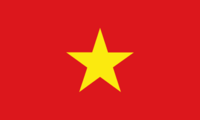 The design of the Vietnam flag is a very simple one – a bright yellow star emblazoned upon a bright red background. Although simple, the design of the flag does indeed have a very significant meaning. As can probably be guessed, the red background of the Vietnam flag was based upon the flag of the Communist Party. The yellow star does not have such an obvious meaning, however. Each point of the five pointed yellow star on the
  The colors of the
  Flag Blog