Flag of Guatemala

The original flag of Guatemala was adopted on August 17, 1871, and the current version was adopted in 1968. The flag is rectangular and divided into three vertical fields. The left and right fields are sky blue and the center field is white with the Guatemalan coat of arms in the center.

The blue and white colors on the flag of Guatemala represent the original colors used by the Federal Republic of Central America: a republican democracy that spanned what is now Costa Rica, Nicaragua, Honduras, El Salvador, Guatemala, and the Mexican state of Chiapas. The blue stripes on the side of the flag also represent the Pacific Ocean and the Caribbean Sea, the two large bodies of water that border Guatemala. The white symbolizes peace and purity.

In 1968, the Guatemalan coat of arms was added to the center of the flag. The coat of arms contains five main elements. The bird is the Resplendent Quetzal, and is a species distinct to Central America and also symbolizes liberty. The scroll contains the phrase, “Libertad 15 de Septiembre de 1821,” meaning “September 15, 1821 is that date of Central America’s independence from Spain.” The crossed rifles with bayonets represent the Guatemalan people’s willingness to defend their country by force if necessary. The crossed swords represent honor and the laurel branches, common to many coats of arms, signify victory.

Guatemala used several different flags between its independence from Spain in 1821 and the adoption of its current flag. When Guatemala was part of the Federal Republic of Central America (1825-1838), it flew a blue and white tricolor flag, but with horizontal stripes instead of vertical stripes. After the dissolution of the Federal Republic, Guatemala flew the same tricolor but with a different coat of arms in the center until 1851. When a pro-Spanish faction took over Guatemala in 1851, red and yellow stripes were included in the Guatemalan flag until 1871.

Canadian Gift Ideas

Looking for the perfect gift for your favorite Canadian? The United States Flag Store has the best Canadian flag gifts at the best prices. From patches and pins to hard hats and flag spinners, you’re sure to find a Canadian flag gift that fits your budget!

If you haven’t seen the United States Flag Store’s Country Spinner Flagpole Kit with Adjustable Brackets, this makes a perfect flag gift for any flag enthusiast. The kit includes a beautiful three-by-five foot polyester flag with metal grommets and a high-quality aluminum spinner that rotates so your flag won’t wrap around the pole. Adjustable aluminum brackets and EZ mount clips are also included. These kits are excellent for residential use inside or out and are available for as $19.50 each when you order ten or more kits!

If you’re looking for a smaller gift, the Canadian flag lapel pin or American-Canadian flag lapel pins are great choices. Available for as low as $0.75 each, these pins have an all-gold metal lacquered design, a metal clutch, and enamel finish. Even at a price this low, these pins are of better quality than many of our competitors!
The United States Flag Store has two fantastic Canadian flag decals. The decals are made of durable vinyl that is waterproof and printed with UV-blocking inks. The decals’ adhesive is nonpermanent, making them perfect for display on a car, trailer, boat, truck, or motorcycle. Choose from a basic Canadian flag or an oval decal with the letters “CDN” and Canadian flags on either side.

For your favorite Canadian construction worker, check out the United States Flag Store’s Canadian hard hat made by MSA. With a bright and attractive design, a superior finish, and MSA’s Fas-Trac suspension, this hard hat brings together Canadian pride and superior safety. These Maple Leaf hats are available for as low as $27.08 each: almost $9 off the list price!

Be sure to check out the United States Flag Store’s other Canadian flag gift ideas, including stickers, temporary tattoos, and patches to satisfy all your Maple Leaf needs!

Flag of Armenia

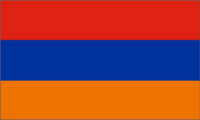
The flag of Armenia was adopted on August 24, 1990. The flag is rectangular and a horizontal tricolor. The top stripe is red, the middle stripe is blue, and the bottom stripe is gold.

The colors on the Armenian flag have symbolic meaning but the exact interpretation varies. According to the Constitution of the Republic of Armenia, the red stripe has five meanings: it represents “the Armenian highland, the Armenian people’s continual struggle for survival, maintenance of the Christian faith, Armenia’s independence, and freedom.” The blue stands for the Armenian people’s determination to live under peaceful skies. Finally, the orange represents the Armenian people’s creativity and hard-working attitude.

Another tradition presents a slightly different interpretation. The red stands for the bloodshed and lives lost by Armenian soldiers in wartime. The blue represents the sky, and the orange represents the fertility of the Armenian soil and also the agricultural workers.

Previous versions of the Armenian flag are very different from the country’s current banner. The earliest Armenian flags used in ancient times varied by dynasty. The flags would usually include a symbolic animal—a dragon, eagle, or lion, for example—on a solid background.

In the nineteenth century, Armenia split between the Persian and Ottoman Empires and the region did not wave a flag for most of the century. In 1885, however, the Armenian Students Association of Paris requested an Armenian flag to fly at the French writer Victor Hugo’s funeral. Father Ghevont Alishan, an Armenian Catholic Priest, designed Armenia’s first tricolor flag with red, green, and white stripes. Alishan designed the flag with intentions of the red stripe symbolizing “Red” Sunday (the first Sunday of Easter) and the green band symbolizing the “Green” Sunday. Alishan chose white was chosen arbitrarily to complete the flag.

When Armenia gained independence on May 28, 1918, the Democratic Republic of Armenia adopted the first version of the modern Armenian flag. The flag was officially adopted again in 1990 by the Armenian Supreme Soviet (the Armenian legislative body) with a slightly different ratio than the original 1918 flag.

Flag of Georgia

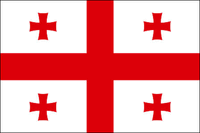
The flag of Georgia was adopted on January 25, 2004. The flag known as the “five-cross flag” because it features five St. George’s crosses: one cross stretches across the flag’s white background and one small cross appears in each quadrant of the flag.

The flag of Georgia is based on the single St. George’s cross flag, which pays tribute Saint George, a Christian soldier, priest, and martyr.  He is one of the most venerated saints in the Catholic, Anglican, Eastern, Orthodox, and Oriental Orthodox churches.  According to legend, St. George saved the King of Silene’s daughter from a plague-bearing dragon that the king’s daughter was sent to slay herself. Saint George tamed the dragon and brought the beast into the king’s village where Saint George told the townspeople that he would slay the dragon if everyone agreed to become baptized Christians.  The townspeople consented, Saint George slayed the dragon, and the king built a church on the site of the dragon’s death.

The single St. George’s cross flag is probably one of the oldest flags in the world, and was used in Georgia by King Vakhtang Gorgasali in the fifth century. In the thirteenth and fourteenth centuries, the “five-cross flag” was used under the reign of Queen Tamar of Georgia and George V of Georgia, respectively. According to medieval tradition, the five crosses represent the five Holy Wounds of Christ.

After the medieval era, the “five-cross flag” was not used and many other versions of the Georgia flag were developed. In the twentieth century, the Democratic Republic of Georgia flew a red rectangular flag with two short horizontal stripes—one black and one white—in the upper left corner. This flag was used from 1918 until 1921 and from 1990 until 2004.

When Georgia was under Soviet rule and known as the Georgian Soviet Socialist Republic (1921-1990), the country used three different communist flags. Each flag was red and included either the Georgian Soviet Socialist Republic’s name or the hammer and sickle icon.

Winter Solstice Windsock

The winter solstice is just around the corner, and the Winter Solstice Windsock from the United States Flag Store is the perfect way to welcome the shortest day of the year!

The winter solstice is December 21 at exactly 11:38PM and refers to the moment when the Earth is at the farthest point from the sun in its orbit. Although the solstice only occurs for an instant, the term is used to refer to the first day of winter and also the shortest day (longest night) of the year. From this day forward, the days will gradually get longer until the summer solstice, in June.
Many cultures have and continue to honor and observe the winter solstice. In ancient times, surviving the winter was not always certain, so reaching the winter solstice marked an important time to make sure one had enough food in reserves to last until spring. In more temperate areas, the winter solstice marked a final celebration that included slaughtering animals that wouldn’t survive the winter and drinking the first of the fermented grains prepared from the wheat harvest. Still other cultures celebrate the birth or rebirth of sun gods.

Even now, many people gather at the winter solstice in order to have something to look forward to on the darkest day of the year. These gatherings most notably occur in arctic regions of the world where winter daylight hours are few and seasonal depression is more common.

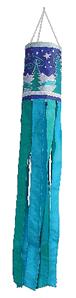
No matter what your winter solstice traditions are, the Winter Solstice Windsock is a great way to beat the winter blues! Featuring a bright wintry scene complete with trees, stars, and snow in bright and bold blues and greens, just looking at this windsock will brighten your day! Even better, it’s fade and mildew resistant so it’s sure to last a harsh winter. Don’t forget to order the matching garden flag to really brighten your outdoor décor!

Winter Garden Flags

Winter is here—complete with snow—and your home décor isn’t complete without a Winter Garden Flag from the United States Flag Store! With an awesome selection of designs and new ones always arriving, winter may get old, but your flags will not!

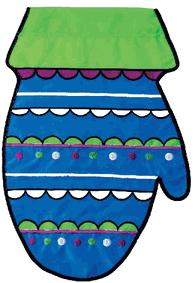
If whimsical flags are your style, you’ll find a great selection of adorable winter-themed flags. The Mitten Applique Flag features an cute mitten cutout decorated in bold blue, green, and purple colors. The flag is garden sized (12.5” x 18”) and is fade and mildew resistant. The Snowman Applique Flag is an absolutely adorable way to decorate your house! The flag features a smiling snowman donning a big black hat, scarf, and red patches. To top it off, a little red bird sits on a holly leaf on his hat!
If you really like snowmen, the United States Flag Store has several great snowmen flags. The Chilly Snowman Applique Flag features an appliqued snowman wearing earmuffs and a scarf looking at a bird in a Christmas tree. “Welcome” is written across the bottoms in a cute handwritten style, making it look like the snowman wrote the word himself!

The Snowman Pyramid Flag features six happy snowmen wearing hats, scarves, and mittens, standing on top of one another in a pyramid on a starry night. If six snowmen is too many, the Winter Snowman Flag features one chilly, but heartwarming, snowman wearing a Christmas-colored scarf, hat, and mitten. Two red bird fly in the green and red background. Best of all, this design is also available in a banner flag and mailbox cover to make a complete set!

The United States Flag Store also has a beautiful selection of scenic winter flags. Choose from plenty of bird flags featuring blue birds, chickadees, and cardinals. Or, welcome winter with a beautifully designed snowflake flag, all available at the United States Flag Store’s website!

Mailbox Covers

Are you tired of your same old, boring—and maybe rusty—mailbox? The U.S. Flag Store is here to help you give your old mailbox a makeover with a Mailwraps Magnetic Mailbox Cover! With addressable, seasonal, holiday, and animal mailbox covers, you’re sure to find something to spruce up your box!

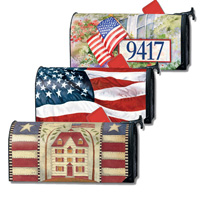
If you’re looking for a unique way to display your street address, then consider personalizing a Mailwraps Addressables Mailbox Cover. With a huge variety of styles featuring turning leaves, birds, pumpkins, snowmen, flowers, and the American flag, you can customize your mailbox wrap to your own home’s style.
Christmas is in just a couple of weeks now, but it’s not too late to order your Christmas Mailbox Cover. The U.S. Flag Store has so many Christmas styles to suit your tastes: designs include whimsical snowmen, Christmas tree scenes, Santa, and poinsettia. But don’t forget the other holidays! At the U.S. Flag Store site, you’ll find mailbox covers for Valentine’s Day, St. Patrick’s Day, Easter, Memorial Day and the Fourth of July, Halloween, and Thanksgiving.

Show off your patriotic American spirit with Mailwraps Patriotic Mailbox Covers featuring plenty of good old red, white, and blue! You’ll find a wide variety of patriotic mailbox wraps at the U.S. Flag Store’s website. Some of the designs available include an Addressables mailbox cover, a colonial flag, an antique flag, patriotic hearts, and a celebration flag. The U.S. Flag Store also has a “Support Our Troops” mailbox cover, featuring the yellow ribbon.

If you like to change your mailbox cover with the seasons, the U.S. Flag Store has a huge variety of season mailbox covers for winter, spring, summer, and fall. Designs feature everything you could imagine: from snowflakes and beach scenes to snowmen and mittens.

Do you have a plastic mailbox? Not a problem at the U.S. Flag Store! Just order a Mailwarps Adapter Kit for plastic mailboxes. The kit includes two self-adhesive “magnet receiver strips” that allow your mailbox to hold on to any of the U.S. Flag Store’s great mailbox covers!

Flag of Virginia

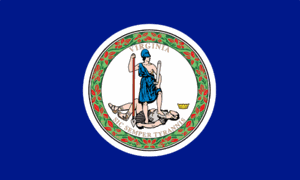
The Flag of the Commonwealth of Virginia was adopted on January 31, 1861 at the beginning of the United States Civil War. The flag is rectangular with a blue background. In the center of the flag is the seal of Virginia enclosed in a white circle. Virginia’s seal was designed by George Mason, known as the “Father of the Bill of Rights” and George Wythe, whose signature appears on the United States Declaration of Independence.

The seal depicted on the flag of Virginia features a woman, personifying Virtus, or virtue in ancient Roman times. Virtus is a symbol of peace, and she stands with her sword in its sheath resting her weight on a long spear, indicating a victorious battle. Her bare foot rests on Tyrannis, or tyranny, represented by a man in a purple robe and sandals with a fallen crown. The scene symbolizes the Virginia’s—and the United States’—defeat of the British government during the American Revolution. The broken chain in Tyranny’s left hand further emphasizes Great Britain’s defeat by the American Colonies. Virginia is the only state besides New York to include a crown in its flag.

The word “Virginia” appears on top of the seal, and the Latin phrase, Sic semper tyrannis, appears at the bottom. The motto literally means “Thus Always to Tyrants,” and describes the scene depicted on the seal. The phrase’s origins, like the image, date back to Roman times whe Marcus Junius Brutus assassinated the tyrant Julius Caesar. The phrase has been used to ill effect as well during notable U.S. assassinations. John Wilkes Booth shouted, Sic semper tyrannis, when he assassinated Abraham Lincoln at Ford’s Theatre on April 14, 1865. Timothy McVeigh wore a T-shirt with the phrase and a picture of President Lincoln when he was arrested after the Oklahom City bombing in April 1995. In Virginia, however, saying Sic semper tyrannis, is a common joke dating back to the Civil War and means “get your foot off my neck.”

Flag of South Carolina

The Flag of the State of South Carolina was adopted on September 28, 1861. The flag is rectangular with a blue background. In the center of the flag is a white palm tree. A white crescent appears in the upper left corner.

The Flag of South Carolina was first designed for use in the Revolutionary War. In 1775, Colonel William Moultrie developed the state’s first flag, a blue rectangular banner with a white crescent in the upper left corner, the blue color matching the militia uniforms. The word “liberty” appeared inside the white crescent on the first version of the flag.

The original Revolutionary War flag remained in use until 1861, when the South Carolina General Assembly adopted a flag with a palmetto tree in front of a white oval background. The flag was only in use for two days—it is thus known as the “two-day flag”—and two days later the palmetto tree was modified to a simpler white tree in front of the blue background.

The addition of the palmetto tree on the South Carolina flag recognizes Colonel Moultrie and his troops, who defended Charleston by constructing a fort from palmetto logs.  Because palmetto logs are soft, the British cannons were unable to destroy the fort, allowing the Americans to win the battle at Charleston on June 28, 1776.

Like many other Southern States, South Carolina flew a different flag after it seceded from the Union during the civil war era. South Carolina’s Sovereignty/Secession Flag was actually flown in several parts of the Union during the Civil War to demonstrate support for the South. The Sovereignty/Secession Flag features a red background with a blue cross. Inside the blue cross are white stars. In the left corner of the flag, the crescent and the palm tree are featured next to each other.

The meaning of the crescent is debatable. South Carolina soldiers may have worn a crescent on their caps during the revolution. The crescent is also thought to be symbolic of a “second son,” one who came to the United States in search of a more prosperous life.

Flag of North Carolina

The flag of the State of North Carolina was adopted in 1885. North Carolina was the 12th state to join the United States of America: it gained statehood in 1789.  The flag is rectangular and uses the same colors as the flag of the United States—red, white, and blue—but also includes a golden color to highlight its lettering.

The left side of the flag, closest to the hoist, is blue with a white star in the center. The letter “N” appears to the left of the star, and the letter “C” appears to the right. The date May 20, 1775 appears on golden ribbon above the star, and the date April 12, 1776 appears on another golden ribbon below the star.  To the right of the blue portion of the flag are two equally divided horizontal fields: the top field is red and the bottom is white.

The two dates on the North Carolina flag are important dates in the United States’ battle for independence and are also dates that recognize North Carolina as an important state in the revolutionary movement.  May 20, 1775 recognizes the Mecklenburg Declaration of Independence, which was the first declaration of independence made in the Thirteen Colonies. The citizens of Mecklenburg County signed the declaration on May 20, 1775 in Charlotte, North Carolina.

April 12, 1776 commemorates the Halifax Resolves, which was adopted by the Fourth Provincial Congress of the Province of North Carolina. Like the Mecklenburg Declaration, the Halifax Resolves was named for the town where the document was discussed. The Halifax Resolves motivated North Carolina’s leaders, including Joseph Hewes, William Hooper, and John Penn, to join the other United States colonies and declare independence from Britain.

When North Carolina seceded from the Union on May 20, 1861—just six years after the flag’s adoption—the date of the Halifax Resolves was replaced with North Carolina’s secession date. The blue field on the left was changed to red and included a larger star and the red field on the right side of the flag was changed to blue. The official North Carolina flag was restored after the Civil War.