
The Flag of Idaho was adopted on March 12, 1907, and was slightly modified in 1957. The flag was based on the design of a flag carried by the First Idaho Infantry in 1899 during the Spanish-American War.
 The flag is a field of blue with the state seal in the center. The words “State of Idaho” appear on a a red and gold band in gold letters. The official description of the flag calls for a fringe of gold around the edges, however, many of the versions of this flag do not include this feature.
The state seal in the center of the flag shows a miner and a woman that are said to represent equality, liberty, and justice. The other symbols on the state seal signify some of Idaho’s resources, such as mines, forests, wildlife, and farmland.
The following information was excerpted from the Idaho Statutes, Title 46, Chapter 8.
TITLE 46. MILITIA AND MILITARY AFFAIRS.
CHAPTER 8. MISCELLANEOUS AND GENERAL PROVISIONS.
46-801. STATE FLAG. A state flag for the state of Idaho is hereby adopted, the same to be as follows: A silk flag, blue field, five (5) feet six (6) inches fly, and four (4) feet four (4) inches on pike, bordered with gilt fringe two and one-half (2 1/2) inches in width, with state seal of Idaho twenty-one (21) inches in diameter, in colors, in the center of a blue field. The words “State of Idaho” are embroidered in with block letters, two (2) inches in height on a red band three (3) inches in width by twenty-nine (29) inches in length, the band being in gold and placed about eight and one-half (8 1/2) inches from the lower border of fringe and parallel with the same.
 The symbol has definite meaning; four is a sacred number which symbolizes the Circle of Life: four winds, four seasons, four directions, and four sacred obligations. In a 2001 survey by the
 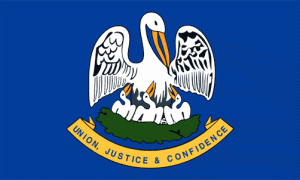 The image in the center of the Louisiana Flag is commonly referred to as a “pelican in her piety”. It depicts a mother pelican intentionally wounding herself in order to feed her babies with her own blood. On the
 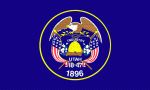 The seal is the focus of the flag and is an integral part of the design of the flag. The great seal is described in Utah Code Annotated, 1953, Volume 7a, section 67-2-9 as follows:
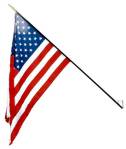 In classrooms throughout the United States,
  On Sunday evening, like two little children looking through a toy catalog and circling things we want for Christmas, my husband and I grabbed the latest issue of sports illustrated (which has a great breakdown of what players they think will be the top performers this year) and headed into the living room for kickoff.
 Flags have come a long way and represent various things such as states, countries, sport teams, military units, religious symbols and much more. In addition to great variety, flags are now available in various sizes. One of my favorite items is the
 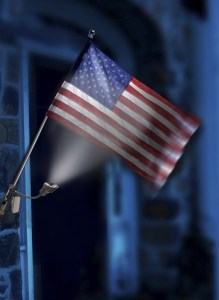 Proud Americans will often show their stubborn respect for this nation’s history by displaying that flag in his or her own home. But sometimes, that’s just not enough. If you look at a US flag posted outside a government building, you’ll notice that the flag is lit up, even at night.
 The flag was previously the flag of the Irish Free State and it was adopted in 1919 unilaterally during the war of independence by the Irish Republic. Subsequently, the Irish Free State also adopted the flag and later it was given constitutional status in 1937 by the Constitution of Ireland. Many nationalists feel the flag is the national flag of Ireland and as such is flown (controversially) in Northern Ireland by nationalists and the Gaelic Athletic Association.
 Flag Blog